
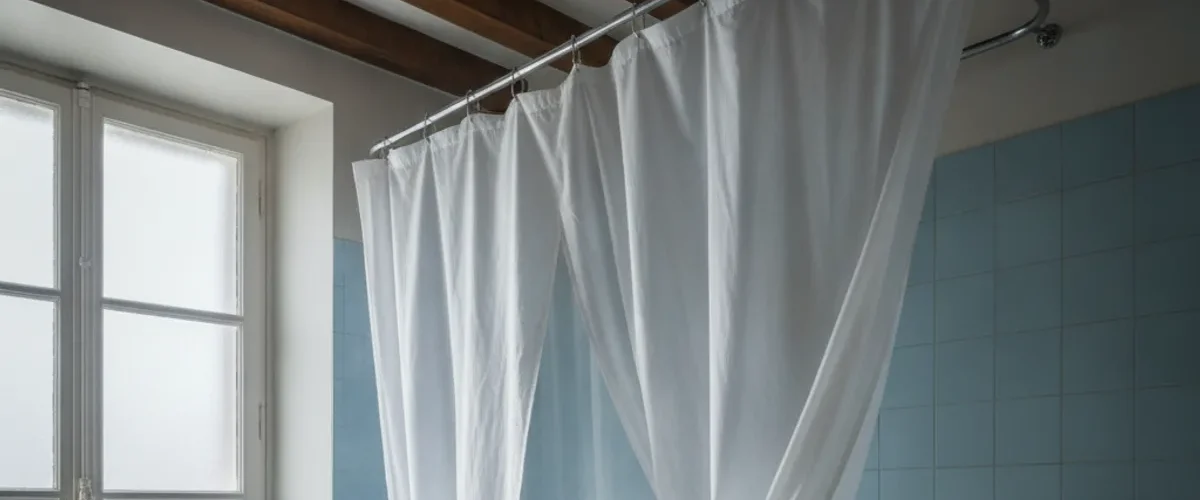
It is a common and curious phenomenon experienced during showers: seemingly out of nowhere, the shower curtain begins to billow inward, clinging insistently to one’s legs. Despite the prevalence of modern bathroom ventilation and advances in design, this issue persists and continues to puzzle many people. Understanding the root causes of this occurrence involves delving into the mechanics of air movement, temperature differences, and even subtle aspects of physics, which all contribute to the mysterious motion of the shower curtain.
What physical principles influence shower curtain movement?
The inward movement of a shower curtain is primarily governed by the dynamics of air and pressure differentials. When hot water from the shower sprays out, the temperature inside the shower quickly rises, causing the air within this confined space to heat up and become less dense. This heated air starts to move upward, just as in any basic convection current, which sets the surrounding air into motion as well. Because the heavier, cooler air outside the shower remains denser, the phenomenon of pressure imbalance emerges: an area of lower pressure forms inside the shower, pulling the lightweight curtain toward this region. This effect becomes even more pronounced in bathrooms with poor ventilation, limited airflow, or smaller shower enclosures, where the pressure difference becomes more significant.
How does the “Bernoulli Principle” explain this phenomenon?
The Bernoulli Principle, a cornerstone of fluid dynamics, plays a notable role in understanding the inward suction of shower curtains. When water from the shower head is ejected at high velocity, it drags air along, creating a localized airflow inside the shower. According to the Bernoulli Principle, an increase in the speed of a fluid—or in this case, air—occurs simultaneously with a drop in pressure. The faster airflow inside the shower stall produces an area of lower pressure. The higher pressure on the outside then pushes the curtain toward this region of lower pressure, making it appear as if the curtain is being sucked inward. This principle applies whether the curtain is made of plastic, fabric, or even heavier materials, as long as there is enough pressure difference to overcome the curtain’s resistance.
Are other factors at play beyond physics?
While air pressure and fluid dynamics are significant, additional environmental and design elements further influence this phenomenon. Other contributing factors can include:
Recognizing these additional factors is important for effectively addressing or mitigating the shower curtain’s mobility. Simple changes, such as switching curtain materials or adjusting bathroom airflow, can often produce noticeable improvements.
Is there a relationship between bathroom size and curtain behavior?
The interaction between the shower curtain and air pressure is intensified in smaller bathrooms or enclosures. When space is limited, the air displaced by the shower spray and heated water has less area to dissipate, causing more dramatic differences in air movement on either side of the curtain. In larger bathrooms, with greater air volume and more circulation, the pressure differential diminishes, resulting in less curtain movement. Furthermore, bathrooms with doors and windows that open directly onto the outside, or those that include modern exhaust systems, experience a reduction in the pressure build-up responsible for the curtain’s behavior.
What practical solutions help stop the shower curtain from moving?
Preventing unwanted curtain movement is a practical concern for many. Some effective strategies and modifications can alleviate the issue:
Each method addresses the root cause—pressure differentials and airflow—by either impeding the curtain’s movement or adjusting the environment to prevent significant air imbalances. Individuals may choose a solution or combination that best fits their unique bathroom layout and preferences. For additional topics related to daily life solutions, you may find insightful information through this comprehensive overview of our site’s structure.
How do scientific experiments validate these explanations?
The movement of the shower curtain has attracted both amateur and professional scientists. Experiments conducted in laboratory conditions confirm the interplay of airflow, temperature-induced convection currents, and pressure differences. For example, researchers have used smoke or colored mist to visualize air movement patterns inside a running shower. The results consistently demonstrate the inward pull corresponding to areas of reduced pressure and accelerated airflow. Similarly, computer simulations modeling hot and cold air regions illustrate how pressure gradients develop and how the placement of physical barriers—such as curtains—intercepts these motions, resulting in observable inward movement.
Can bathroom upgrades and installations further help?
Modernizing bathroom features allows for greater control over shower environment and curtain behavior. Some upgrades and installations that can help include:
Each of these strategies is tailored to minimize the pressure differences and air currents that drive the curtain toward the user. For general home improvement and maintenance advice, you might find the main site homepage useful for everyday tips.
Why do some showers experience this more than others?
The frequency and severity of inward curtain movement can vary widely even between bathrooms in the same building. Variations arise from differences in water pressure, temperature preferences, curtain materials, and overall layout. Older buildings, for instance, often lack efficient ventilation, making pressure build-up a common problem. Conversely, newer construction standards tend to address these issues with well-designed HVAC and airflow systems. Understanding the unique combination of factors in any given bathroom is essential to diagnosing and remedying the situation effectively.
Why does understanding shower curtain movement matter?
At first glance, the inward movement of a shower curtain might seem to be nothing more than a minor irritation. However, it is a compelling illustration of how basic principles of physics—such as pressure differentials, convection, and fluid dynamics—govern everyday experiences. This seemingly mundane occurrence opens a window to a broader appreciation of the scientific factors at play in common household scenarios, encouraging a more informed and proactive approach to home comfort and usability. Exploring the varied causes empowers people to implement targeted and practical solutions, making each shower experience easier and more comfortable.